
A view on Asian and US markets
As published by Field Research September 9, 2024.
https://mailchi.mp/fieldresearch/acton-090924-wbxp
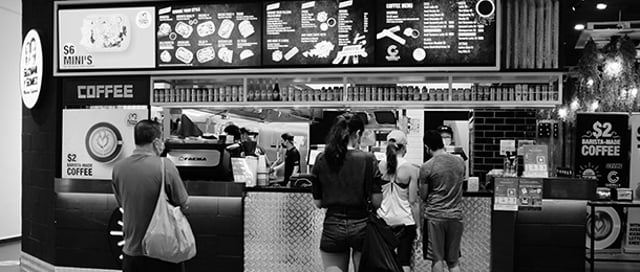
QSR companies such as GYG can expand successfully in south-east Asia and the US so long as they have the right leadership or franchisees in place, according to transpacific QSR specialist Dave Acton.
Mr Acton is the director of food and beverage consultancy Cannect Asia.
Being of North American heritage and a resident of Singapore, he has a unique perspective on QSR brands’ offshore expansion plans.
Previously he was the Vice President – South East Asia at Dairy Queen and CEO of Singapore’s 4FINGERS Crispy Chicken. 4FINGERS International was Mad Mex’s 50 per cent venture partner prior to the pandemic.
Mr Acton says pizza chains such as Domino’s and Pizza Hut do well in Singapore but because they’re focused on their halal offerings customers aren’t as loyal to them as they are to some more traditional, Western-style brands.
“Western Mexican” on the other hand is gaining traction in Singapore amongst locals, he says, as the ingredients are not dissimilar to the foods that they’re used to – tortilla shells are like Indian naan bread for instance – and it’s perceived to be cleaner and healthier than conventional fast food such as burgers and fries.
New upstarts are entering the Singaporean market such as Korean-Mexican fusion restaurant Vatos and GYG has started to expand into the city’s heartland away from the major malls in downtown areas.
“The economics can be profitable. Singapore’s a fair-sized market and you can make a good living with 5-10 locations. McDonald’s runs 120 locations and GYG could get to a quarter of that, 25-30 locations, so double its current footprint, in the next five years if it can get creative when choosing locations,” Mr Acton says.
“Singapore’s not a culture of cars so you’re not going to have giant freestanding with drive-thru like in Australia, the US or Canada. It’s a transit culture so you can build kiosk-style units, 500 square feet, and do quite well. We have several homegrown small chains here like Superitto that are doing well on a very small scale. The units are 300- 500 square feet and they’re starting to get decent locations and I could see them expanding beyond Singapore and Malaysia.”
Malaysia is a hard market to crack for any QSR brand that relies on imported ingredients because of the weak currency while Japan can be a great opportunity but because it’s not English centric there are challenges, Mr Acton says.
“You have to have a Japanese leadership team or on the ground team right away. You can’t do business in Japan as easily in English as you can in the rest of the south-east Asian market including South Korea and Hong Kong.”
Across the Pacific, Mr Acton says GYG has a foot in the door in the US now and has strong potential to position to fit in somewhere between Taco Bell and Chipotle in terms of price and quality so long as it can navigate its growth strategy properly.
“GYG has done a great job on their branding and the complete package, but the US is a big country so GYG has to grow strategically and not all over the place.”
The US may be the most competitive QSR market in the world and there are almost 40 million people of Mexican origin living there but he does not see this as a disadvantage for GYG.
“There’s a percentage of customers that will always be snobbish and say it’s not authentic but Mexican’s part of the food pyramid over there. The American diet is burgers, Mexican and pizza and it’s the ethnic foods.”
Whichever country it all comes down to the quality of one’s partners, Mr Acton says. He notes Little Caesars, a US player that has just backed out of Singapore after the franchisees struggled due to not being in the right locations. Then there’s Taco Bell, which recently returned to Malaysia, which has also had issues with franchisees.
He also points to Domino’s mixed experience with franchisees in Asia.
“Domino’s is a strong player and it sells good franchises. But it doesn’t always pick the right franchisee candidate. In India it really took the right franchisee to make it work.
“You may get somebody in a group that’s passionate about the brand and thinks this is the next big thing, and they’ll do the right things, rent the right locations and put the money in the right spot. And then you’ll get guys who think they’re doing the right thing, but they tend to be in B or C real estate. They tend to be a little bit off track, and they don’t always execute well.”